
The 42 Community Conservancies of Amboseli
The official directory of all 42 verified community conservancies safeguarding 275,389 hectares (680,500+ acres) across 7 landscape groups. From the historic Kimana Sanctuary (1992) to modern transboundary corridors, pastoralist Maasai landowners lead Kenya's largest community-managed wildlife landscape.
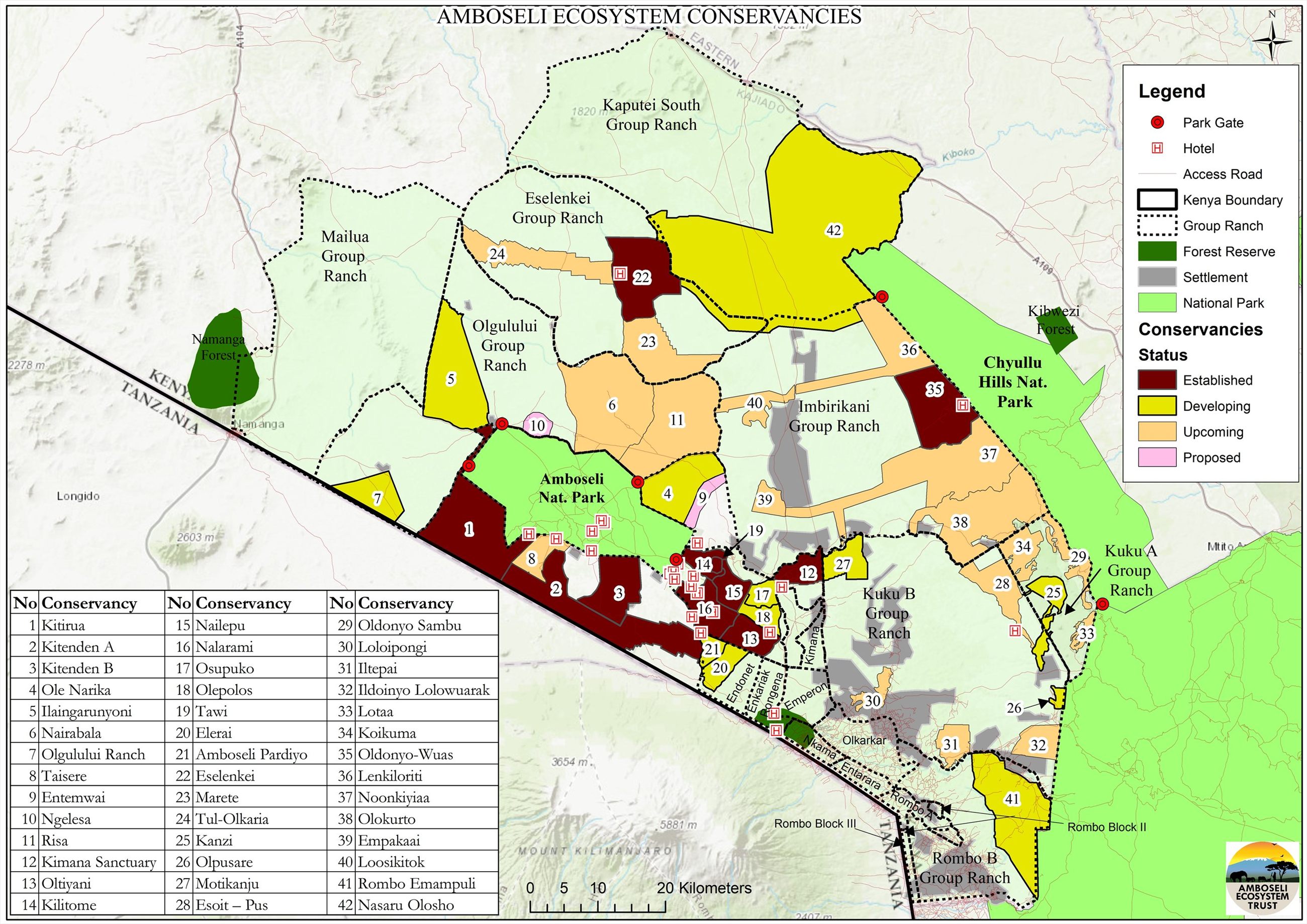
Spatial Map of the 42 Amboseli Conservancies
Official spatial zoning, parcel consolidation boundaries, and wildlife migration corridors uniting 680,500+ acres across 7 community groups.
The 7 Conservancy Landscape Groups
Over 90% of wildlife habitat lies outside the National Park across these 7 community-owned group landscapes, uniting 42 active conservancies under indigenous Maasai stewardship. Click any landscape group below to inspect member conservancies and details.
Kimana Conservancies
Securing the vital wildlife bottleneck connecting Amboseli to Chyulu Hills & Tsavo West.
Olgulului Conservancies
Surrounding Amboseli National Park to provide immediate seasonal grazing range and transboundary Kilimanjaro routes.
Imbirikani Conservancies
Contiguous with Chyulu Hills National Park, maintaining world-renowned predator compensation corridors.
Kuku Conservancies
Protecting the western Chyulu slopes, fresh water spring sources, and high-altitude rangeland sanctuaries.
Eselengei Conservancies
Northern dispersal sector safeguarding critical wildlife corridors extending toward northern plains.
Rombo & Nasaru Olosho
Southern transboundary Tanzanian frontier alongside broader institutional rangeland alliances.
42 Conservancies Across 1.3 Million Acres
Discover the full register of all 42 gazetted community conservancies organized across these 7 landscape groups.
Sustainable Ecotourism & Investment Opportunities
AET's Conservancy Investment Prospectus highlights vetted opportunities for low-impact ecotourism concessions, carbon offset partnerships, and rangeland restoration ventures across selected community conservancies.
All commercial ventures are structured under formal Land Lease Agreements approved by the respective conservancy boards, ensuring equitable community dividends, local employment priority, and rigorous ecological compliance.
Support Community Landowners
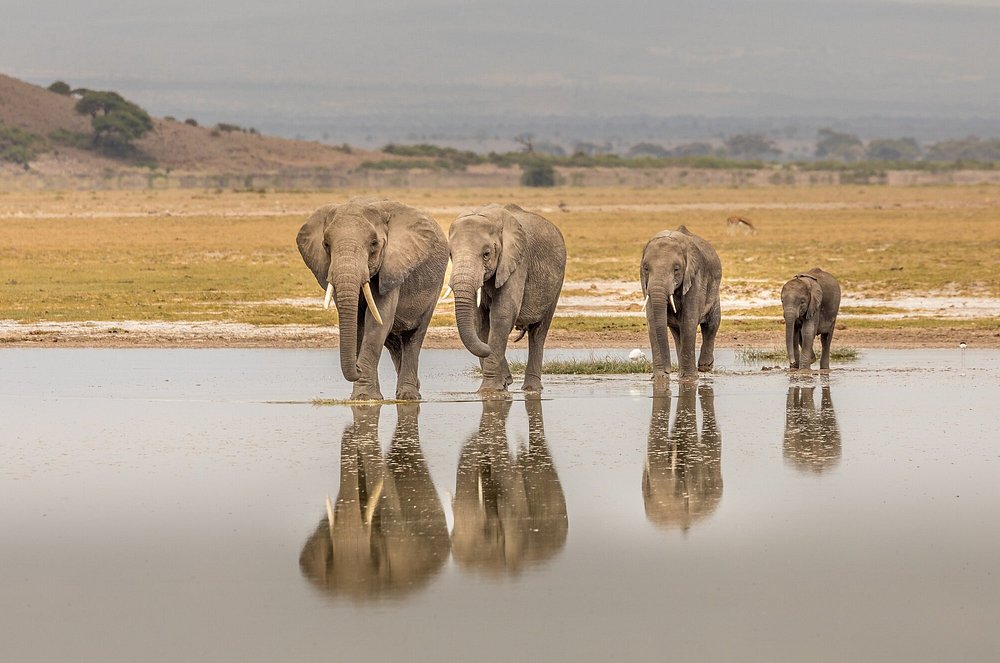
Every acre secured in a community conservancy protects vital elephant migration paths and directly supports pastoral families through sustainable livelihoods.