The Greater Amboseli Ecosystem
The Amboseli ecosystem covers an area of 1.3 million acres (5,700 km²) and is a delicate balance of ecological connectivity between the Amboseli National Park, adjacent group ranches, and conservancies with distant conservation areas such as Chyulu Hills, Tsavo West, and Kilimanjaro West in Tanzania. Designated as a UNESCO Man and Biosphere Reserve (MAB) in 1991.
The Amboseli Water Basin
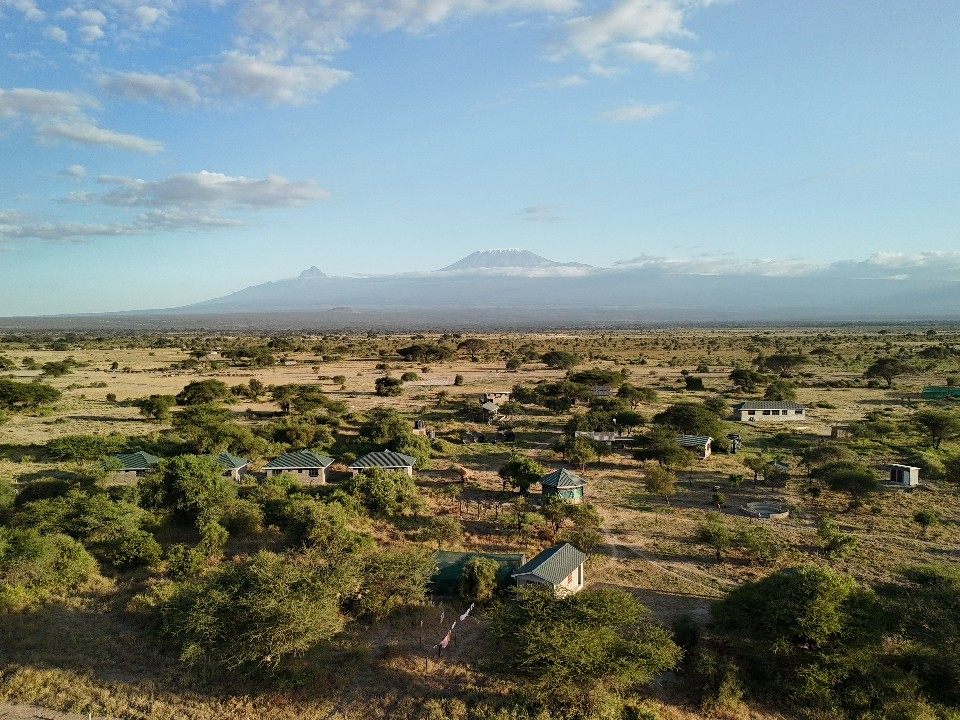
Mount Kilimanjaro's snowmelt trickles underground through volcanic porous rock, bubbling up in the heart of the dry Amboseli basin as permanent freshwater swamps: Enkongo Narok and Longinye.
These perennial wetland oases sustain over 1,800 free-ranging elephants and thousands of pastoralist cattle during intense dry seasons.
The 7 Conservancy Landscape Groups
Over 90% of wildlife habitat lies outside the National Park across these 7 community-owned group landscapes, uniting 42 active conservancies under indigenous Maasai stewardship. Click any landscape group below to inspect member conservancies and details.
Kimana Conservancies
Securing the vital wildlife bottleneck connecting Amboseli to Chyulu Hills & Tsavo West.
Olgulului Conservancies
Surrounding Amboseli National Park to provide immediate seasonal grazing range and transboundary Kilimanjaro routes.
Imbirikani Conservancies
Contiguous with Chyulu Hills National Park, maintaining world-renowned predator compensation corridors.
Kuku Conservancies
Protecting the western Chyulu slopes, fresh water spring sources, and high-altitude rangeland sanctuaries.
Eselengei Conservancies
Northern dispersal sector safeguarding critical wildlife corridors extending toward northern plains.
Rombo & Nasaru Olosho
Southern transboundary Tanzanian frontier alongside broader institutional rangeland alliances.
42 Conservancies Across 1.3 Million Acres
Discover the full register of all 42 gazetted community conservancies organized across these 7 landscape groups.
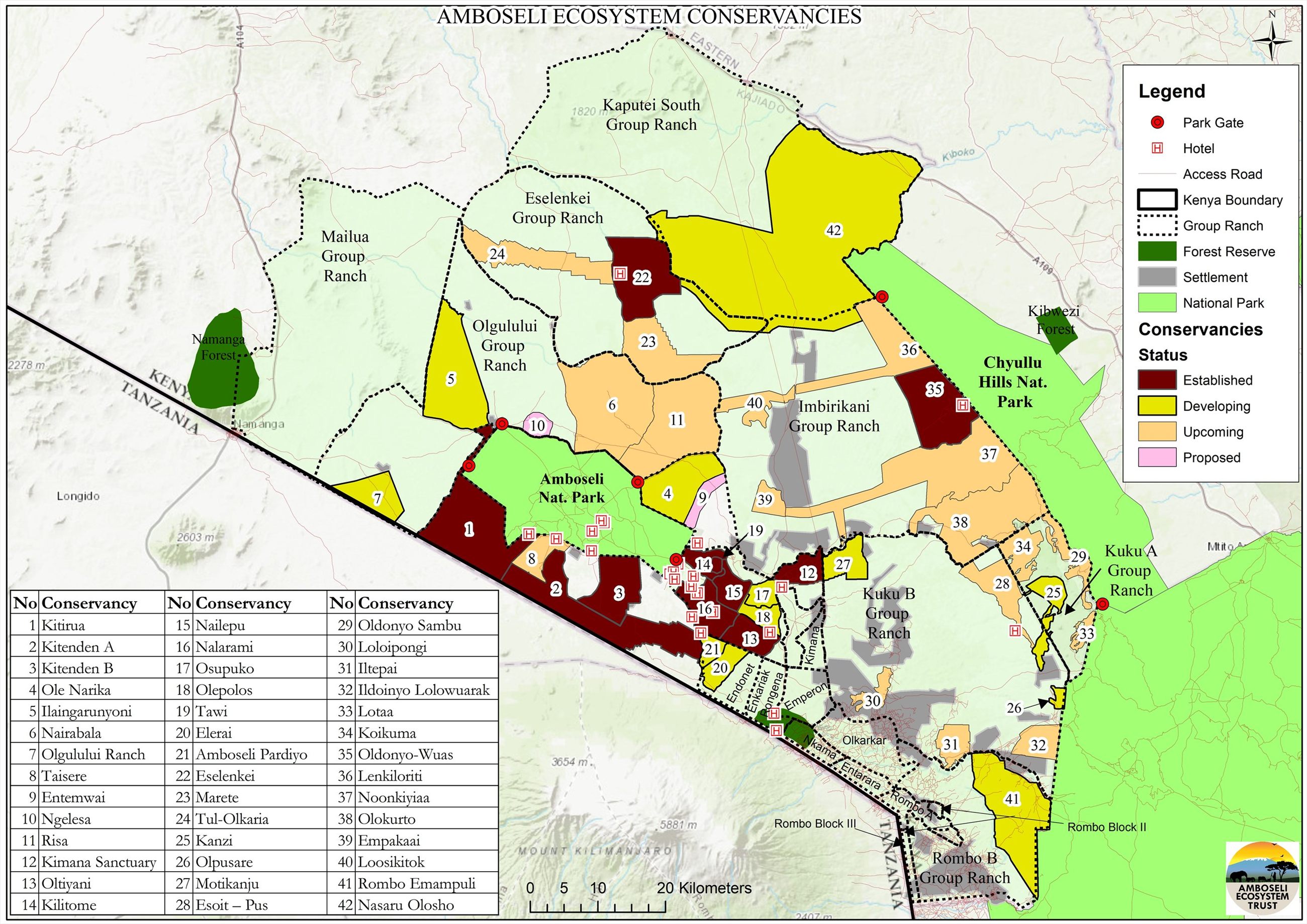
Greater Amboseli Conservancies & Corridors Map
Official spatial layout of the 42 community conservancies, protected corridors, and migration routes connecting Amboseli National Park to Kilimanjaro, Chyulu Hills, and Tsavo West.
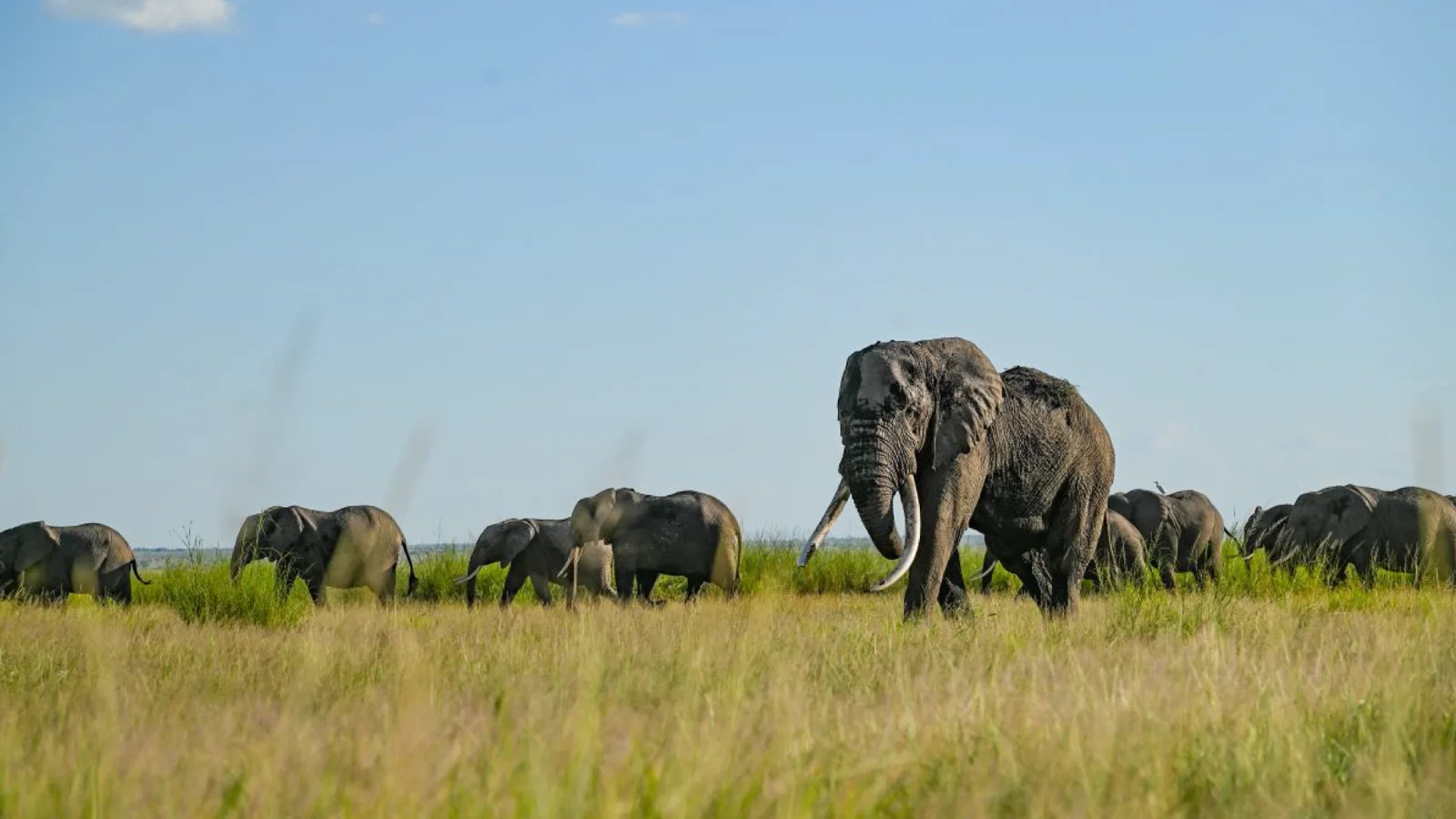
The Amboseli Elephant Population
Home to over 1,800 free-ranging African elephants — the longest continuously studied wild elephant population on Earth, pioneered by the Amboseli Elephant Research Project for over 50 years.
AET works alongside researchers to ensure these ancient elephant matriarchs can safely navigate between community group ranches without conflict.
Discover Our Conservancies & Impact
Learn how community conservancies secure 1.3 million acres of rangeland habitat across southern Kenya.